Choosing the right way to get around London depends on your priority. You might want the cheapest fare from Stansted or a guaranteed wheelchair-accessible vehicle for a trip to Mayfair. The choice between a black cab, a pre-booked minicab, and an Uber app changes how much you pay and how quickly you arrive. We see passengers struggle with these decisions every day because the rules for Private Hire Vehicles (PHVs) differ significantly from those governing licensed hackney carriages. While an Uber might look cheaper on your phone screen, it cannot use bus lanes to bypass congestion in Soho. A black cab uses a regulated meter, whereas PHV prices are often fixed or subject to sudden surges. Understanding these trade-offs helps you avoid being stuck in traffic or overpaying during peak hours.
The three main transport categories
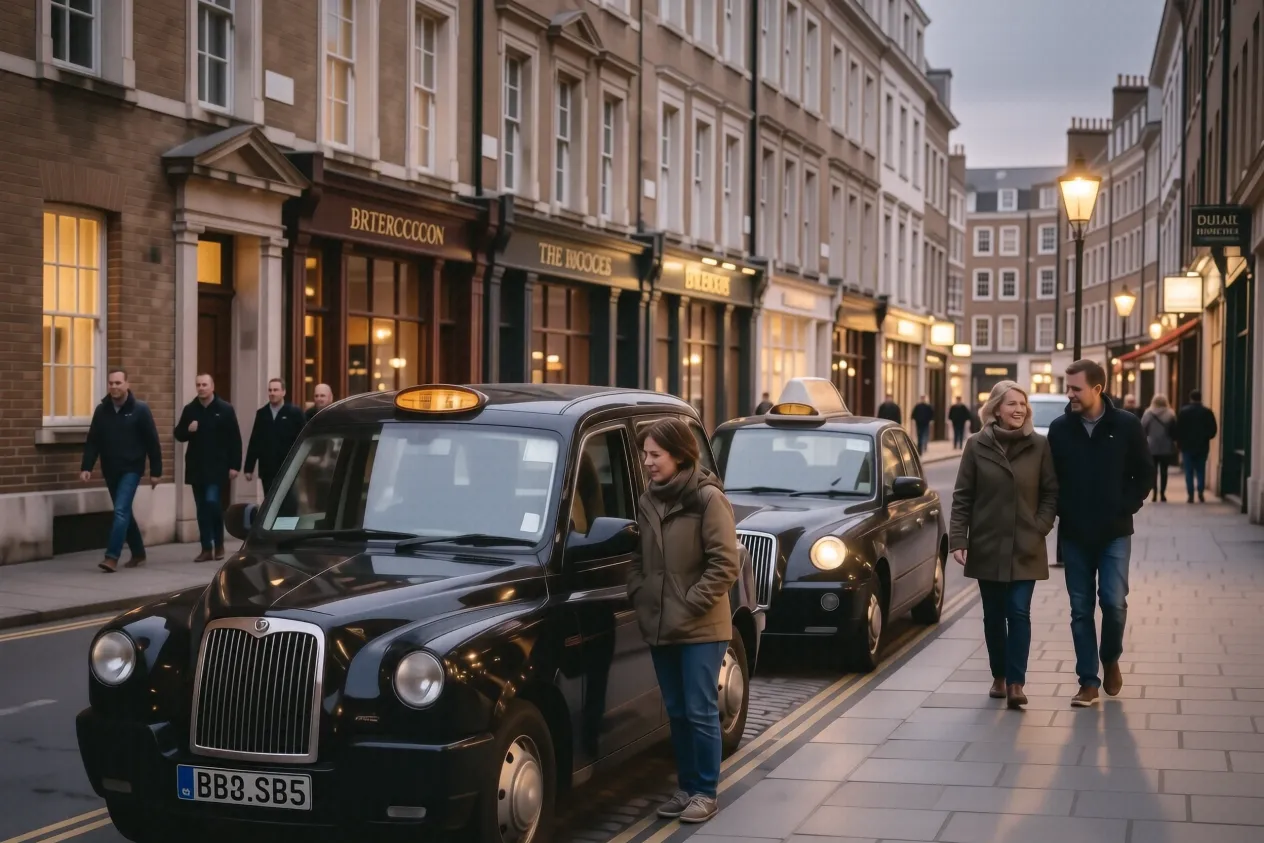
Black cabs are different. These are Hackney Carriages licensed by TfL, which means they can be hailed on the street or picked up at taxi ranks. Because they hold a specific license, they have legal access to London’s bus lanes. This provides a massive advantage when you are stuck in heavy traffic near Piccadilly Circus.
Uber and minicabs fall under Private Hire Vehicle (PHV) regulations. You cannot hail them on a street corner; you must book them via an app or a telephone dispatcher. While they often feel more modern, they are restricted to the same lanes as standard cars. This makes them slower during rush hour.
Reliability varies between these modes. A minicab booked through a local firm offers a fixed price for your trip. Uber uses dynamic pricing that changes based on demand. If it starts raining in Westminster, an Uber fare might double in minutes.
Comparing costs on typical routes
Money matters most to many passengers. We have calculated three common journeys to show how the pricing structures differ. These figures are estimates based on current 2024 London rates and typical demand patterns.
A short trip from Soho to Mayfair is often the cheapest via Uber, costing around £8 to £12. A black cab will likely charge between £10 and £15 because the meter starts at a base rate. Minicabs usually sit in the middle of this range.
For an airport run from Heathrow to Kings Cross, the gap widens. An Uber might cost £55 to £75 depending on the time of day. A pre-booked minicab provides a fixed quote of roughly £60. A black cab could exceed £85 if you hit heavy traffic on the M4.
Stansted to Liverpool Street is a long haul. You might find an Uber for around £70, but surge pricing can push this to £110 during morning peaks. A minicab provides certainty with a fixed price of approximately £80. Black cabs are rarely the choice here because the meter can climb unpredictably.
Speed and the bus lane advantage
Traffic in Central London is brutal. Black cabs have a legal right to use bus lanes, which allows them to skip queues that trap other vehicles. If you are travelling from Marylebone to Chelsea at 5:00 PM, this makes a massive difference. You might save fifteen minutes by staying in the bus lane.
Uber and minicabs must follow standard traffic laws. They sit in the same congestion as buses and private cars. This delay can make a cheap fare much more expensive in terms of your time. We often see passengers regret choosing a cheaper PHV when they are running late for a theatre show.
Drivers also use different methods to find their way. Black cab drivers must pass “The Knowledge,” a rigorous test covering 25,000 streets. They know shortcuts that GPS might miss. Uber and minicab drivers rely heavily on Google Maps or Waze. While these apps are good, they sometimes struggle with temporary road closures or specific one-way systems in the City of London.
Accessibility and safety standards
Safety is a primary concern for late-night travellers. Black cabs are highly regulated by TfL. Every driver must display a specific license, and the vehicle itself undergoes strict inspections. You can identify them easily by their iconic shape and colour.
PHV drivers also undergo background checks, but the visibility of their credentials differs. An Uber driver is identified through the app, whereas a minicab driver uses a plate issued by their local authority. If you feel unsafe, reporting an incident to the police requires different information for each type.
Accessibility is where the black cab wins decisively. Every single TfL-licensed black cab must be wheelchair-accessible. This includes a ramp and sufficient space for a motorised chair. Many Uber or minicab vehicles are standard hatchbacks or saloons that cannot accommodate larger mobility aids. You should always check vehicle specifications before booking if you have specific needs.
Driver earnings and service quality
What a driver takes home affects your ride. Black cab drivers pay high daily rates for their licenses. Because of this, they often need to keep moving to remain profitable. This can lead to some drivers taking longer routes to increase the meter reading. You can read more about how much taxi drivers earn to understand these pressures.
Uber drivers are independent contractors. They do not pay a fixed daily fee but instead give a percentage of each fare to the platform. This often leads to “surge” periods where drivers flock to high-demand areas. While this ensures availability, it can make costs unpredictable for the passenger.
Minicab drivers work for local firms. These drivers usually have more stable schedules and direct contact with their dispatchers. The quality of service can vary significantly between a large national firm and a small local operator. Knowing why London black cabs are expensive helps explain why the premium service exists.
Making your final decision
Choosing a vehicle requires looking at your specific situation. If you need to get to a meeting in Soho quickly, take a black cab to use the bus lanes. The extra cost is often worth the time saved.
For airport transfers, pre-booking a minicab offers the best balance of price and certainty. You will know exactly what you are paying before you leave your house. This removes the stress of watching an Uber fare climb while sitting in traffic on the M25.
If you are travelling alone late at night, the visibility of a black cab provides peace of mind. They are always available at ranks outside major stations and clubs. For budget travellers, Uber remains a strong option during off-peak hours when surge pricing is inactive.
Check out our /black-cabs-guide/ if you want to learn more about the history and mechanics of these vehicles. We hope this helps you plan your next trip through London.
Which should I take? Answer four questions.
No data leaves your browser. Built on the cost, speed, and safety trade-offs we describe above.
-
1. When?
-
2. How many of you?
-
3. Distance?
-
4. Anything special?
Answer all four to see the recommendation.
Frequently asked questions
- Can I hail an Uber on the street?
- No, you cannot. Uber is a Private Hire Vehicle (PHV) service, which means every journey must be booked in advance via the smartphone application. If you stand on a street corner in London, only licensed black cabs or traditional taxis can legally pick you up.
- Why is my Uber fare higher than expected?
- Uber uses a dynamic pricing model known as surge pricing. When demand for rides exceeds the number of available drivers in a specific area—such as during heavy rain or after a football match—the price increases automatically to encourage more drivers to enter the zone.
- Do black cabs use bus lanes?
- Yes, they do. Under London's transport regulations, Hackney Carriages are permitted to use bus lanes to bypass traffic congestion. This is a significant advantage over Uber and minicabs, which must remain in standard vehicle lanes and often get stuck in heavy traffic.
- Are all minicabs wheelchair-accessible?
- Not necessarily. While some minicab firms offer larger vehicles like MPVs that can accommodate wheelchairs, it is not a universal requirement for every car in their fleet. You should always specify your accessibility requirements when booking to ensure the correct vehicle is sent.
- How do I know if a taxi driver is licensed?
- Black cab drivers must display a TfL license plate on the vehicle, usually visible through the windscreen. For PHVs like Uber or minicabs, you should check that the driver's details match the app or the booking confirmation and ensure they have a valid PHV licence displayed.
- Is it cheaper to book a minicab or use an Uber?
- This depends entirely on the time of day and your location. A minicab usually offers a fixed price, which is safer for budgeting. An Uber might be cheaper during quiet periods, but surge pricing can quickly make it more expensive than a pre-booked minicab.
- Can I pay with a card in a black cab?
- Yes, almost all London black cabs are equipped with card readers. TfL regulations require drivers to accept contactless payments, including debit cards, credit cards, and mobile wallets like Apple Pay or Google Pay, making cash unnecessary for most journeys.
Sources
Published 11 May 2026.