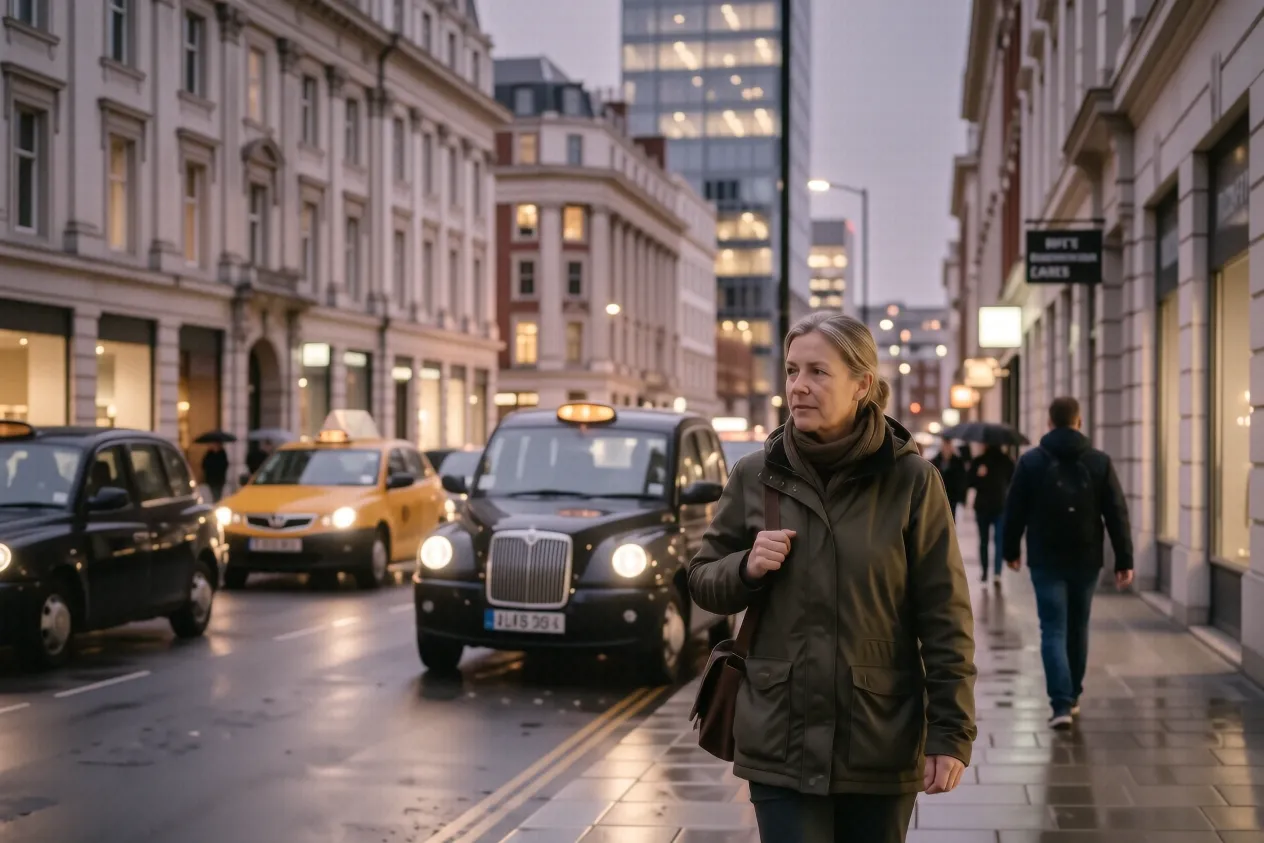
A short trip from Mayfair to Bishopsgate might cost £25. For many visitors, this price feels steep. You might expect a cheaper ride for such a distance. However, London’s black cab economy operates on a specific set of rules and high overheads. We see passengers often mistake these licensed taxis for standard private hire vehicles. They are not the same. Understanding why the meter climbs so quickly requires looking at the math behind the glass.
The mechanics of the meter
The fare is metered. It uses a combination of distance and time to calculate your total cost. Transport for London (TfL) regulates these rates through specific tariff structures that change depending on when you travel.
Tariff 1 applies during standard daytime hours. Tariff 2 usually kicks in during evenings or weekends. If you travel late at night, you will likely face Tariff 3. These rates ensure drivers are compensated for working irregular shifts.
Time is money here. When a taxi sits in traffic, the meter continues to tick upwards based on a “waiting time” rate. This prevents drivers from losing money while idling in gridlock.
Traffic and the speed problem
London is slow. In many inner zones, average vehicle speeds drop to around 9 mph during peak hours. This congestion turns even short journeys into long, expensive stints behind the wheel.
Drivers face constant delays. While a journey through Hackney Wick might look short on a map, one broken-down bus can add twenty minutes to your trip. Because the meter accounts for every minute spent stationary, your fare reflects the city’s congestion rather than just the kilometres travelled.
Traffic is expensive. You pay for the time the driver spends moving through the chaos of the West End.
The cost of professional expertise
The Knowledge is difficult. It is a rigorous qualification that takes most drivers roughly four years to master. This mental map covers 25,000 streets and thousands of landmarks across the capital.
Drivers earn a premium for this skill. They can find the fastest route through narrow alleys in Soho without using a sat-nav. This ability provides a level of reliability that cheaper private hire services often lack.
It is a high barrier. Only those with immense dedication pass the tests set by the Public Carriage Office.
Vehicle overheads and regulations
Taxis are expensive to run. Modern London taxis, such as the LEVC TX5, can cost around £60,000 to purchase. These vehicles must meet strict environmental and accessibility standards to keep their licence.
Accessibility is mandatory. Every licensed black cab must be wheelchair-accessible so that all passengers can use the service equally. This requirement adds significant weight and cost to the vehicle compared to a standard hatchback.
Regulations matter. Drivers must also maintain specific insurance and licensing fees to comply with the London Cab Order 1934 and subsequent updates.
Airport transfers and distance
Airport runs are outliers. A trip from Central London to Heathrow often costs between £60 and £90. This price accounts for the long distance and the high likelihood of heavy traffic on the M4.
Drivers face empty returns. Often, a driver will travel to an airport and return to the city without a passenger in the back. They must price their initial fare to cover this unpaid mileage.
It is a long haul. You are paying for a guaranteed, high-capacity vehicle that can handle heavy luggage.
Finding cheaper alternatives
You have choices. If you want to save money, the London Underground is almost always the cheapest option. The Elizabeth Line offers a fast connection from Heathrow into central zones like Paddington or Canary Wharf.
Pre-booked minicabs are cheaper. Unlike black cabs, private hire vehicles do not use a meter and usually offer a fixed price agreed upon during the booking. However, they cannot be hailed on the street.
Budget matters. We suggest weighing the convenience of a door-to-door taxi against the speed of the Heathrow Express or the low cost of a bus.
Frequently asked questions
- Why is my taxi fare higher than the estimate I saw online?
- Online estimates often fail to account for real-time traffic. Because London taxis use metered pricing based on time, sitting in a queue near Piccadilly Circus will increase the final total significantly.
- Can I negotiate the price with a black cab driver?
- No, you cannot. All licensed London taxis must use the meter as regulated by TfL, so the price is determined by the distance and time elapsed during the journey.
- Are all London taxis wheelchair-accessible?
- Yes, every vehicle licensed as a taxi must be wheelchair-accessible. This is a legal requirement that distinguishes them from many standard private hire cars or minicabs.
- What is the difference between a taxi and a minicab?
- Taxis are licensed to be hailed on the street or picked up at ranks. Minicabs must be pre-booked through a firm and cannot be legally picked up by waving them down.
- Do black cabs accept credit cards?
- Most do. Since 2014, TfL regulations have required all London taxis to accept contactless payments, including debit cards and mobile wallets like Apple Pay.
- Why does the fare change at night?
- TfL uses a three-tier tariff system. Rates increase during late-night hours to compensate drivers for working shifts that are less predictable or more difficult to manage.
Published 17 June 2021. Last updated 11 May 2026.