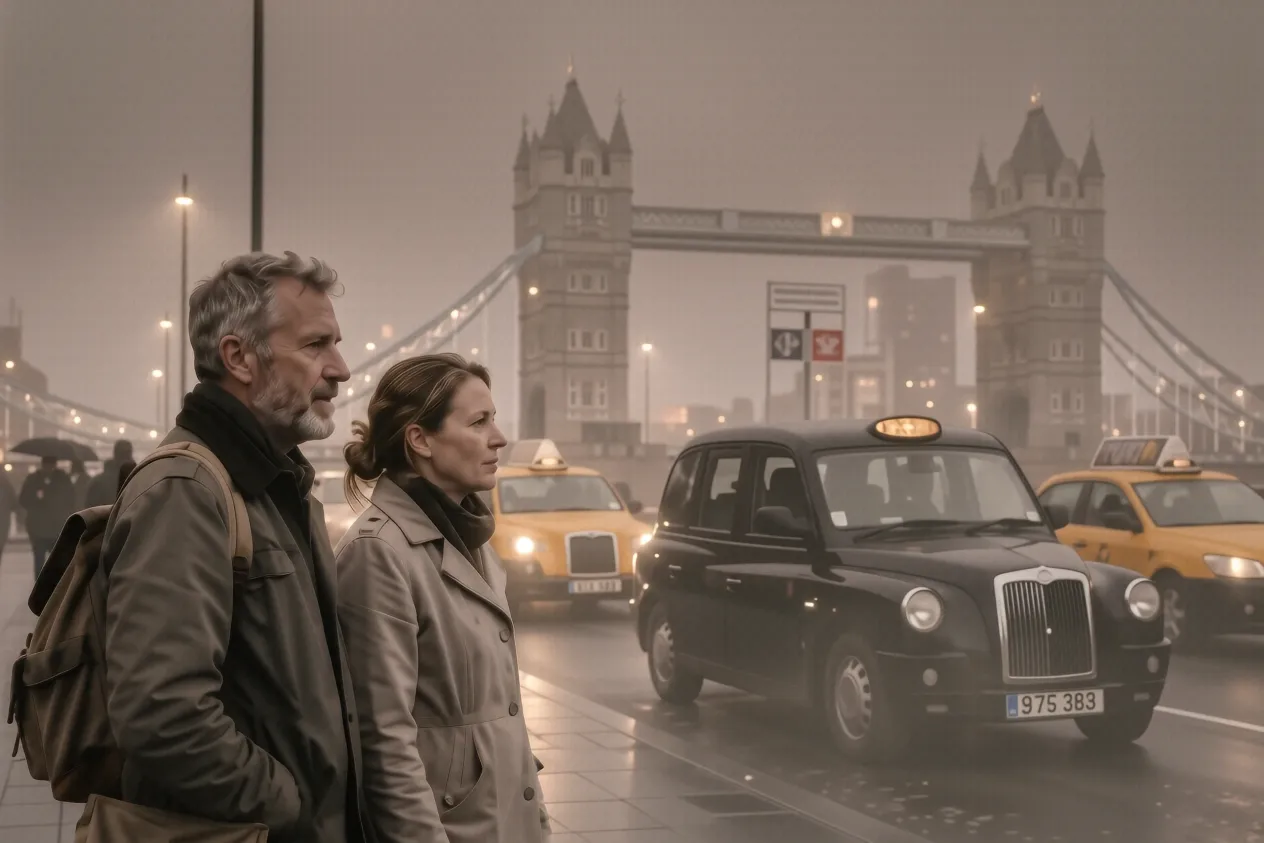
London streets look different every day. You might see a silver Toyota Prius or a black Mercedes saloon, but nothing matches the silhouette of a Hackney carriage. These vehicles are not mere cars. They are highly specialised tools designed to meet the strict requirements of the London Cab Order 1934 and subsequent updates from Transport for London (TfL). While most people call them black cabs, that name describes a tradition rather than a strict legal colour requirement.
The modern LEVC TX
The current king of the road is the LEVC TX. It looks traditional, but the technology inside is quite different. This vehicle is a range-extended electric taxi produced in Coventry. We see these electric motors working alongside a petrol engine that acts as a generator. Because the engine does not drive the wheels directly, the car remains quiet while moving through through Mayfair or Hackney Wick.
It is a clever design. Drivers can cover around 140 miles on pure electric power before the petrol range-extender kicks in to prevent them from getting stranded. This setup helps meet the Ultra Low Emission Zone (ULEZ) standards without forcing drivers to rely solely on charging points that might be occupied.
The production process is specialised. LEVC, which stands for London Electric Vehicle Company, has been owned by the Chinese firm Geely since 2013. They use this ownership to source parts while maintaining the specific engineering needed for London’s unique demands.
A lineage of steel and diesel
Before the electric era, the TX4 reigned supreme. It was a diesel workhorse that many drivers used for decades. The history of these vehicles spans several different manufacturers and model names. We can trace the lineage back through the TX1, TX2, and TXII models to the legendary FX4.
The FX4 changed everything. Produced between 1958 and 1997, it became the definitive shape of the London taxi. It was manufactured by companies like Mann & Overton before LTI took over the mantle. This long production run established the standard for what a cab should be.
History is often messy. Before LTI dominated, other makers like Beardmore or Winchester attempted to enter the market. They failed because they could not match the specific geometry required by London’s regulators.
Why they are built this way
A standard car cannot do this job. Most passenger cars struggle with the tight corners of ancient London streets. A Hackney carriage must have a turning circle of approximately 25 feet so that drivers can perform a U-turn in narrow lanes. This ability is essential for efficiency.
The interior layout is also specific. Regulations require enough space for a passenger to enter easily, often including wheelchair-accessible ramps and dedicated space for mobility aids. There are also “jump seats” in the middle of the cabin. These allow the cab to carry up to five or six passengers depending on the configuration.
Space matters. The height of the roof was historically designed so that a gentleman in a bowler hat could sit comfortably without removing his headwear. While hats have changed, the high ceiling remains a practical necessity for passenger comfort.
The myth of the black colour
Are they actually black? Not always. You will occasionally see a cab painted in navy or even dark green. The “black cab” nickname exists because black was simply the default colour chosen by many early painters and owners.
It is not a TfL rule. There is no specific regulation in the London Cab Order that mandates a black paint job for all Hackney carriages. However, the dark shade has become an unofficial part of the brand identity.
Most minicabs are different. You will see plenty of silver or white saloons used by private hire companies. These drivers do not follow the same strict vehicle specifications as the licensed Hackney carriage drivers. They use standard cars because they do not need to perform tight U-turns or carry large groups.
Frequently asked questions
- What is the difference between a black cab and a minicab?
- Black cabs are Hackney carriages that can be hailed on the street or picked up at taxi ranks. Minicabs, often called private hire vehicles, must be pre-booked through an app or a telephone number and cannot be legally picked up by waving from the pavement.
- Do all black cabs have to be black?
- No, they do not. While the name is iconic, there is no law requiring the vehicle to be black. Most are dark colours, but you might see different shades depending on the owner's preference or the specific fleet requirements.
- Why can't I just use a regular car as a taxi in London?
- Regular cars lack the necessary turning circle and interior space required by TfL. To be a licensed Hackney carriage, a vehicle must pass 'The Knowledge,' which requires the cab to be able to manoeuvre through the most complex parts of the city effortlessly.
- Is the LEVC TX fully electric?
- It is a range-extender. This means it uses an electric motor for primary movement but carries a small petrol engine to charge the battery when it runs low. This prevents the driver from running out of power during long shifts.
- Where are these taxis made?
- The current LEVC TX models are manufactured in Coventry. This is a significant shift from earlier eras where much of the assembly happened closer to London, but the Coventry plant remains the heart of their production.
- How many black cabs are there?
- There are around 21,000 licensed taxis operating across London. The number fluctuates as older diesel models like the TX4 are phased out in favour of newer electric versions like the LEVC TX.
- What is 'The Knowledge'?
- This is a rigorous testing process for drivers. They must memorise thousands of streets and landmarks within the London zones to ensure they can navigate without using a GPS, which is a requirement for the Hackney carriage license.
Published 17 June 2021. Last updated 11 May 2026.