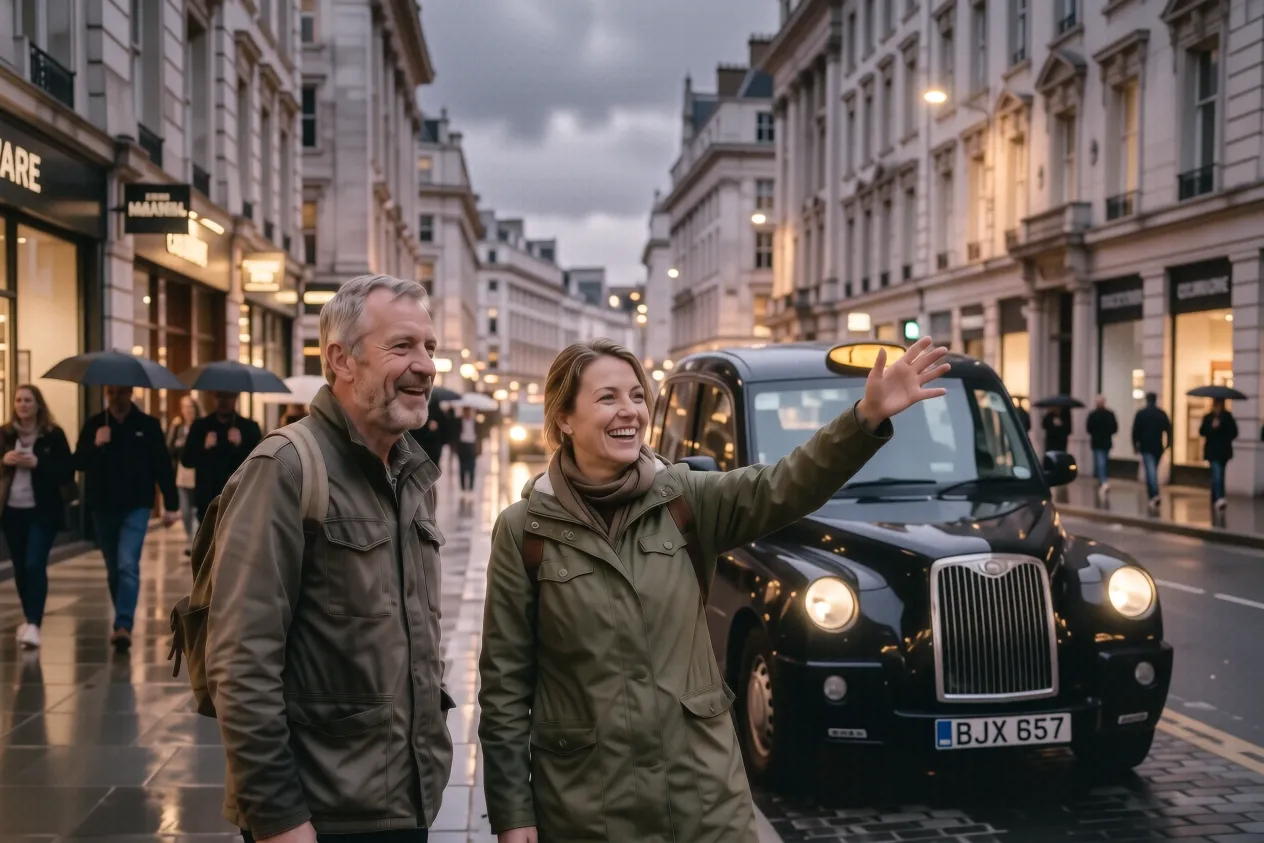
London streets move fast. If you stand on a pavement in Mayfair or Hackney Wick without knowing the rules, you might miss every passing taxi. The iconic black cab remains the gold standard for transport because drivers must pass the rigorous Knowledge exam. These vehicles follow strict regulations set by the Public Carriage Office to ensure passenger safety and reliability. You cannot simply wave at any dark car that passes your position. Success requires watching the roof of the vehicle for a specific signal.
Reading the roof light
The roof light tells the story. Every licensed taxi displays a small, illuminated sign on its roof when it is available for hire. This light shows the word ‘TAXI’ in a bright yellow colour. If the light is dark, the driver has already accepted a passenger or is heading to a specific destination.
Watch the lights closely. You should only attempt to signal a vehicle if that yellow glow is clearly visible to you. Drivers often cruise through busy areas like Bishopsgate specifically looking for this visual cue from pedestrians.
It works quickly. Once you see the light, prepare your gesture so the driver can spot you immediately.
The correct hailing gesture
Do not shout at drivers. While it might feel instinctive to call out when a cab approaches, London drivers rely on visual signals to maintain safety while driving. A simple, firm movement of your arm is the standard method used by locals and tourists alike.
Extend your arm. You should raise your hand or arm towards the approaching vehicle so the driver can see you in their wing mirror. This gesture works best if you are standing clearly on the pavement rather than leaning into the road.
Keep it steady. A single, clear motion is better than frantic waving which might confuse a driver moving through heavy traffic.
Where you cannot hail
Certain roads prohibit hailing. You cannot flag down a black cab on a motorway or any slip road because stopping there is illegal and dangerous. Red routes are also off-limits for this activity. These high-priority roads, often marked by double red lines, are designed to keep traffic flowing through central London without obstruction.
Avoid bus stops too. Drivers are not permitted to pick up passengers at a designated bus stop if it interferes with the scheduled service or safety of other commuters.
Stay on the pavement. If you find yourself near a restricted zone, walk a short distance until you reach a legal stopping point.
Using taxi ranks and apps
Taxi ranks offer certainty. These official stands are located outside major hubs like Victoria Station, King’s Cross, or Heathrow Airport. When you stand in a rank, you join a queue of passengers waiting for the next available vehicle. This is often faster than wandering the streets during a rainy afternoon.
Technology provides alternatives. If you prefer not to stand on a street corner, you can use licensed apps such as Gett or Free Now. These services allow you to summon a licensed black cab directly to your GPS location via your smartphone.
Check the vehicle type. While these apps are convenient, always ensure the vehicle is a registered taxi rather than an unlicensed private hire car.
Avoiding illegal touts
Stay alert near stations. Unlicensed drivers often loiter outside major transport hubs or popular nightclubs in Soho to intercept unsuspecting visitors. They may approach you and claim they can get you a cheaper ride. These individuals operate outside the London Cab Order 1934 regulations and offer no legal protection if something goes wrong.
Ignore the offers. A legitimate black cab driver will never approach you on the street to solicit business; they wait for you to signal them.
Always insist on a meter. If a driver refuses to use the official taximeter or asks for a fixed cash price before the journey begins, leave immediately. This is the safest way to ensure you are not overcharged by an illegal operator.
Frequently asked questions
- How do I know if a cab is available?
- Look at the light on the roof of the vehicle. If it shows a bright yellow 'TAXI' sign, the driver is looking for passengers and can pull over to collect you.
- Can I pay with a credit card in a black cab?
- Yes, all licensed London taxis must accept contactless payments and credit cards. This regulation ensures that passengers do not need to carry large amounts of cash while travelling through the city.
- What is the difference between a black cab and a minicab?
- Black cabs are licensed by TfL and can be hailed on the street or found at ranks. Minicabs, also known as private hire vehicles, must be pre-booked through an app or a phone call before they can legally pick you up.
- Is there a fixed price for a journey to Heathrow?
- There is no single fixed price because black cabs use a meter that calculates fares based on distance and time. You can check TfL's website for estimated fare ranges, but the final cost depends on your specific route and traffic conditions.
- What should I do if I have heavy luggage?
- Black cabs, such as the modern TX5 LEVC models, are designed to accommodate large amounts of luggage. Most drivers will assist you with loading your bags into the boot once they have pulled over safely.
- Are black cabs wheelchair-accessible?
- Yes, many London taxis are specifically designed to be wheelchair-accessible. You can identify these vehicles by their signage, and they include ramps to allow passengers to enter the vehicle easily.
- Can I hail a cab in the rain?
- You certainly can, but you should stay under a shelter until you see an available taxi approaching. Once the light is on, use your arm signal clearly so the driver identifies you through the weather.
Published 31 March 2024. Last updated 11 May 2026.