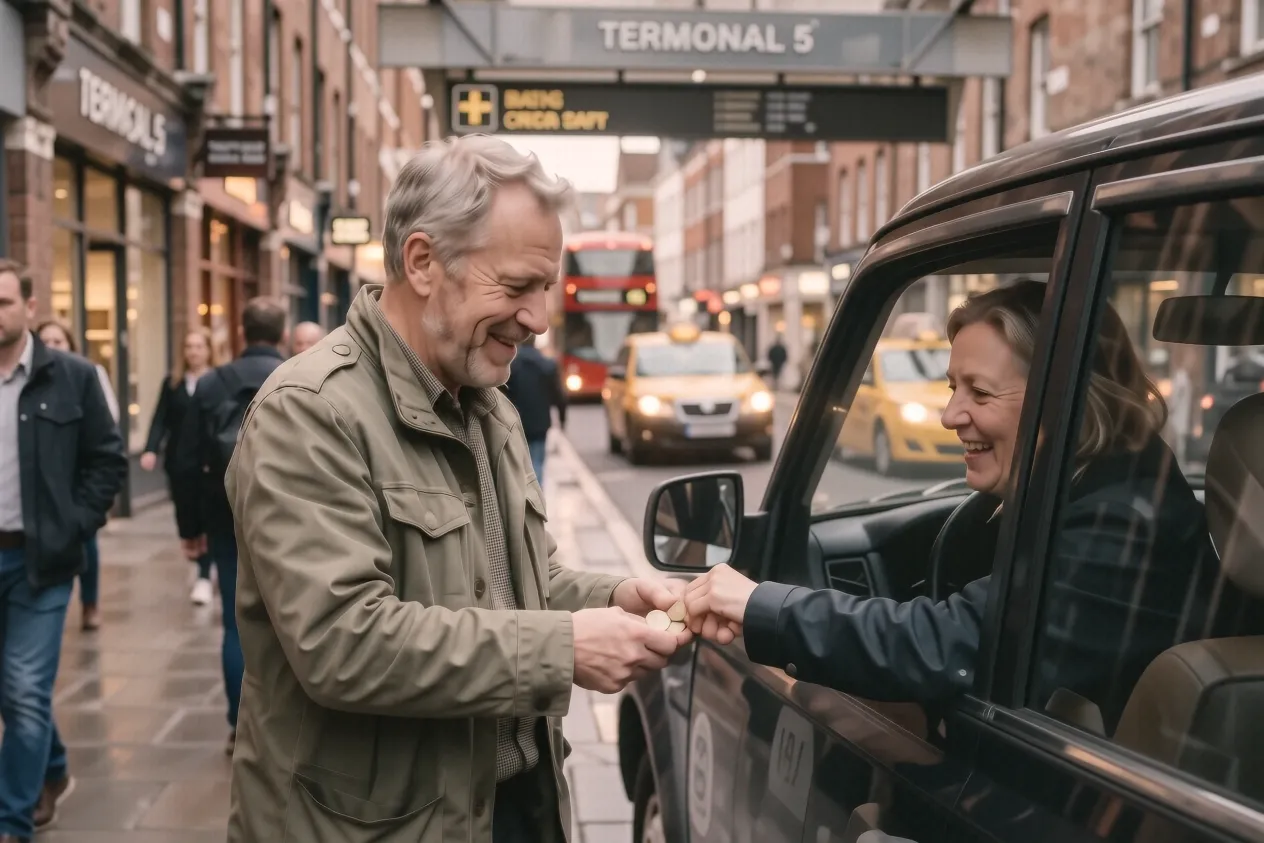
For metered airport transfers, a 10% tip on the final fare is considered generous. Many passengers simply round up to the nearest £5 increment for simplicity. If your driver assists with heavy suitcases from the Heathrow Terminal 5 arrivals hall to your vehicle, adding an extra £2 to £5 is standard practice. Tipping is never a mandatory requirement in the UK. It remains a gesture of appreciation for good service during long journeys.
Metered Fares vs Fixed Prices
Metered taxis operate differently than private hire vehicles. You might take a black cab from Victoria Station to Gatwick Airport. The meter tracks every minute and kilometre of that journey. In this scenario, 10% is a kind addition. We often see passengers round a £42 fare up to £45 or £50.
Small change matters. Drivers appreciate the gesture.
Fixed-price bookings through companies like Addison Lee or local airport transfer specialists change the dynamic. These pre-booked runs usually include a set price agreed upon at the time of booking. Tipping is less customary here because the driver knows their exact margin before they start the engine. You can still tip if the service exceeds your expectations.
Luggage and Service Standards
Airport runs involve physical labour. A driver helping with three large suitcases from a car boot to a hotel lobby in Slough deserves recognition. We suggest an extra £2 to £5 specifically for this assistance. It covers the extra effort required beyond basic driving.
Service varies widely.
Most modern UK taxis use contactless card terminals. These machines often display preset percentage prompts like 10%, 12.5%, or 15%. Choosing the 10% option is perfectly fine and socially acceptable. You are not expected to select the highest amount available on the screen.
Drivers do not depend on these tips for their basic livelihood. Most UK taxi drivers earn a base rate through their licensed work. Tipping functions as a way to reward helpfulness or punctuality. If your driver arrives ten minutes early at Manchester Airport during a rainstorm, a small tip is appropriate.
Payment Etiquette in the Cab
Cash is still used. However, card payments dominate the industry now. When the terminal asks for a tip, you can often select “No Tip” if the service was merely adequate. This does not make you a rude passenger.
Be polite.
If you pay with cash, ensure you have small notes ready. Handing over a £20 note for a £15 fare forces the driver to find change. This creates unnecessary delay at the airport drop-off zone. Carry £5 notes or coins to make the process efficient for everyone involved.
Frequently asked questions
- Is tipping mandatory for UK taxi drivers?
- No, it is not a legal requirement. Tipping serves as a voluntary way to show appreciation for excellent service or help with heavy luggage. You should never feel pressured to tip if the service was poor or standard.
- What is a good tip for a long airport transfer?
- For a metered ride, 10% of the total fare works well. If the fare is £63, rounding up to £70 is a common and easy method. This covers the length of the trip and the driver's time.
- Should I tip if the driver carries my bags?
- Yes, luggage assistance warrants an extra amount. We recommend adding £2 to £5 specifically for the physical effort of moving suitcases from the terminal to the vehicle. This is separate from the fare percentage.
- How do I tip on a card machine?
- Most UK cabs use terminals that prompt you for a gratuity after the fare is processed. You will see options like 10%, 12.5%, or 'No Tip'. Selecting 10% is a standard and respectful choice for most passengers.
- Do I tip pre-booked private hire cars?
- It is less common to tip fixed-price bookings. Since the price is set in advance, the driver's profit is already determined. You may still tip if they provide exceptional service, but it is not expected.
- What if the taxi is very dirty or late?
- You are under no obligation to tip in these circumstances. Tipping is a reward for quality service. If the vehicle is poorly maintained or the driver is unprofessional, skip the gratuity entirely.
Published 11 May 2026.